TikTok Short Drama: What It Is and How to Make Your Own With AI
You’ve probably swiped past one without realizing it: a billionaire slams a contract on the table, a betrayed wife walks into a wedding she wasn’t invited to, a “rejected mate” turns out to be royalty - all wrapped up in sixty seconds, ending on a cliffhanger that makes your thumb stop scrolling. That’s a short drama, and TikTok has quietly turned it into one of the platform’s fastest-growing content categories.
In this article, we’ll break down what a TikTok short drama actually is, why the format is suddenly everywhere, the genres and story structures that keep people watching episode after episode, and a step-by-step way to write, cast, and shoot your own - without a camera, a crew, or a single actor - using AI. If you’re already familiar with what’s trending on TikTok more broadly, think of short drama as the platform’s fastest-growing sub-format inside that bigger picture.
What Is a TikTok Short Drama?
A TikTok short drama (also called a micro drama or vertical drama) is a scripted, serialized story told in vertical, phone-sized episodes - usually one to three minutes each, with a full season running anywhere from 20 to over 100 episodes. Instead of one 90-minute film, the entire plot is chopped into bite-sized chapters, each one built around a single scene, a clear emotional beat, and a hook that pushes you straight into the next episode.
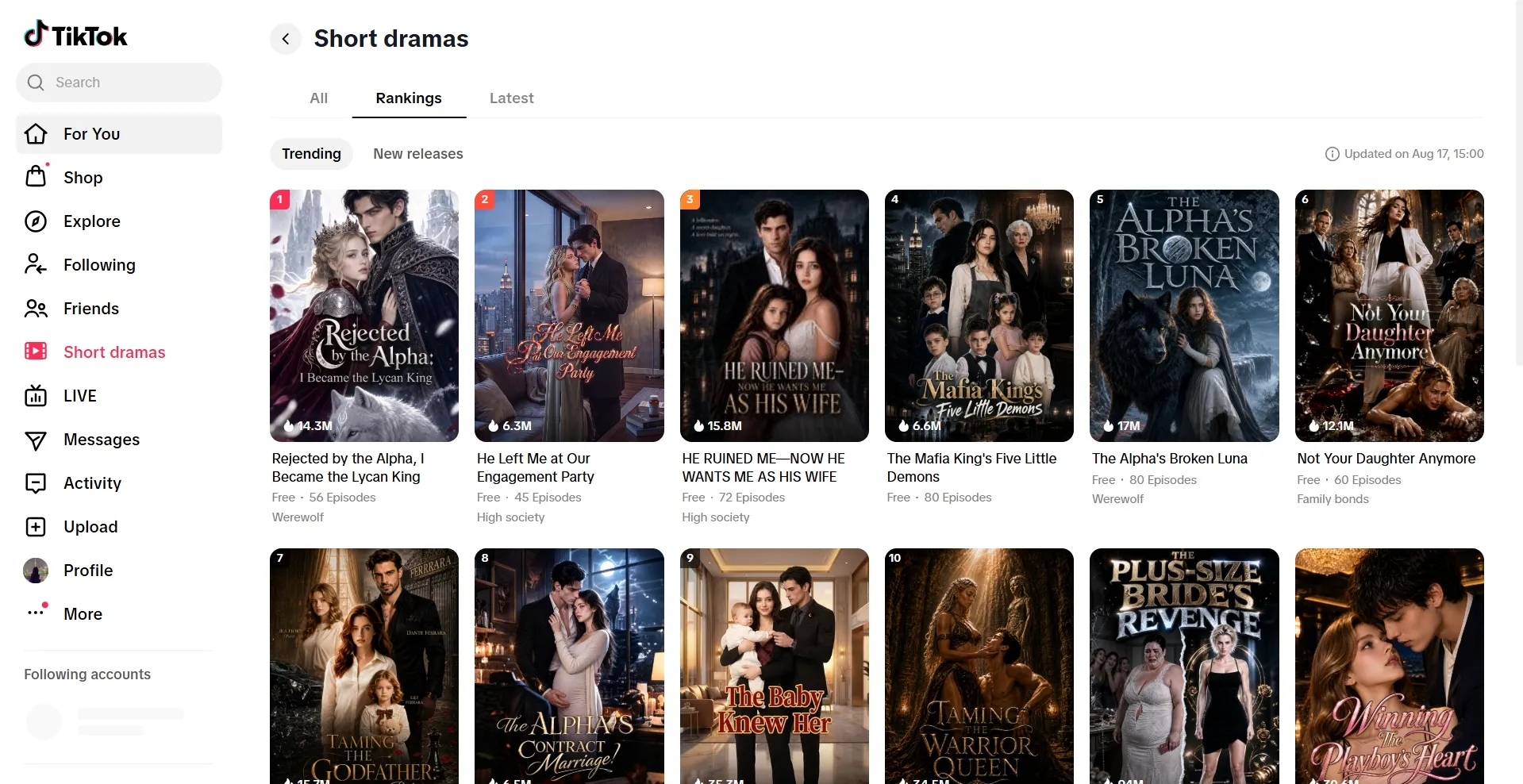
You don’t even have to go looking for it. TikTok now has a dedicated Short dramas button right in the main navigation, next to Shop, Explore, and LIVE:
- Rankings tab - split into Trending and New releases, so you can see what’s actually working right now.
- Latest tab - an endless scroll of fresh episodes as they’re published.
- Genre tags - titles are labeled Werewolf, High society, Family bonds, and more, so you can browse by trope.
- Like-based ranking - top trending shows regularly pull 10-15M+ likes across 45-80 episode seasons.
That button started quietly rolling out in late 2025 and has been reaching more accounts throughout 2026. TikTok has backed it with real investment too - a companion standalone app called PineDrama, an official partnership with Issa Rae’s production company HOORAE on an original micro series, and its own creator training programs for the format. This is now a core part of the app, not a passing trend.
Why TikTok Short Dramas Are Exploding Right Now
Short drama isn’t a niche fandom anymore - it’s a genuine content and business category, and the numbers explain why creators are rushing in:
- It’s a multi-billion-dollar market. Global micro-drama app revenue jumped from roughly $178 million in Q1 2024 to nearly $700 million in Q1 2025, and the overseas short-drama market is projected to keep growing at a 25%+ annual rate through the end of the decade.
- The top apps are massive. ReelShort and DramaBox each generated close to $140 million in revenue in a single quarter of 2026, while newer entrants like FreeReels surpassed 100 million installs in the same period - proof that new players can still break through fast.
- Engagement rivals streaming. Average daily time spent on short-drama apps reached about 25 minutes globally by April 2026, up 85% year over year, with some Southeast Asian markets approaching 40 minutes a day - genuinely competitive with time spent on traditional streaming platforms.
- TikTok is building the format into the app itself. Between “TikTok Minis,” the PineDrama app, and TikTok’s own original productions, short drama is no longer something that just happens to circulate on the platform - it’s becoming a first-party feature. It’s a similar pattern to what’s driving growth on Instagram Reels right now - platforms increasingly building native tools around the content types that already work.
- It’s genuinely accessible. Unlike a traditional TV pilot, a short drama needs a strong hook, consistent characters, and a vertical frame - not a studio budget. That’s exactly why AI animation tools have found such a natural home in the format.
The Genres and Tropes That Keep People Watching
Short drama runs on a small set of extremely reliable story engines, and knowing them is the fastest way to write one that actually holds attention:
| Genre | Core Fantasy | Why It Works |
|---|---|---|
| CEO / Billionaire Romance | An ordinary lead collides with a powerful, wealthy love interest | Combines the “penthouse and boardroom” wealth fantasy with a power-reversal payoff |
| Revenge | A wronged protagonist returns to expose or outsmart their betrayers | Every episode delivers a small piece of justice, which keeps completion rates high |
| Werewolf / Fantasy Romance | Fated mates, hidden royal bloodlines, pack hierarchies | Front-loads stakes instantly - the audience doesn’t need to be convinced the leads belong together |
| Contract Marriage | A marriage of convenience that slowly becomes real | Built-in slow burn with a guaranteed emotional payoff |
| Hidden Identity | A secretly powerful or wealthy character tests whether they’re loved for themselves | Delivers a satisfying reveal moment that’s easy to promote as a standalone clip |
| Family / Rebirth Drama | A second chance to fix a past mistake or expose a family betrayal | Taps universal, easily-localized emotional beats |
Notice these genres mix and match constantly - a revenge plot with a hidden-identity twist, a contract marriage with a werewolf reveal. That flexibility is a feature, not a shortcut: it lets a single premise be reused across dozens of scripts without feeling repetitive to a new viewer.
The Anatomy of a Viral Short Drama Episode
Every short drama that performs well on TikTok follows roughly the same three-beat structure, compressed into sixty to ninety seconds:
- The Hook (first 2-3 seconds). The line, image, or conflict that stops the scroll - a slap, a confession, a reveal. There’s no slow build; the drama starts before the intro even finishes.
- The Tension. One scene, one location, one escalating conflict. Short drama scripts avoid subplots inside a single episode - everything serves the one emotional beat that episode is built around.
- The Cliffhanger. The episode ends mid-conflict, not after it resolves - a reveal the audience knows but a character doesn’t, or a sudden reversal of power. This is what turns a single view into a binge.
Character consistency matters just as much as the script. Because a season can run 50-100 episodes, viewers need to instantly recognize the same face, voice, and wardrobe every time a character reappears - which is exactly the production problem that makes short drama harder to fake than it looks, and exactly where AI tools have made the biggest difference. Mapping out each beat with an AI storyboard generator before you generate a single frame also makes it much easier to spot where the cliffhanger should actually land.
How to Create Viral Short Drama with Anijam AI
The bottleneck with short drama has never really been the story - creators can write a hook and a cliffhanger in minutes. The bottleneck is production: casting consistent-looking actors, filming multiple outfits and settings, voicing dialogue, and editing dozens of episodes without a studio behind you. Anijam’s AI short drama generator is built to remove exactly that barrier - every project is organized as a running list of episodes, with an AI assistant sitting alongside the editor that already knows what happened in your last episode. Here’s how to build a season from scratch.
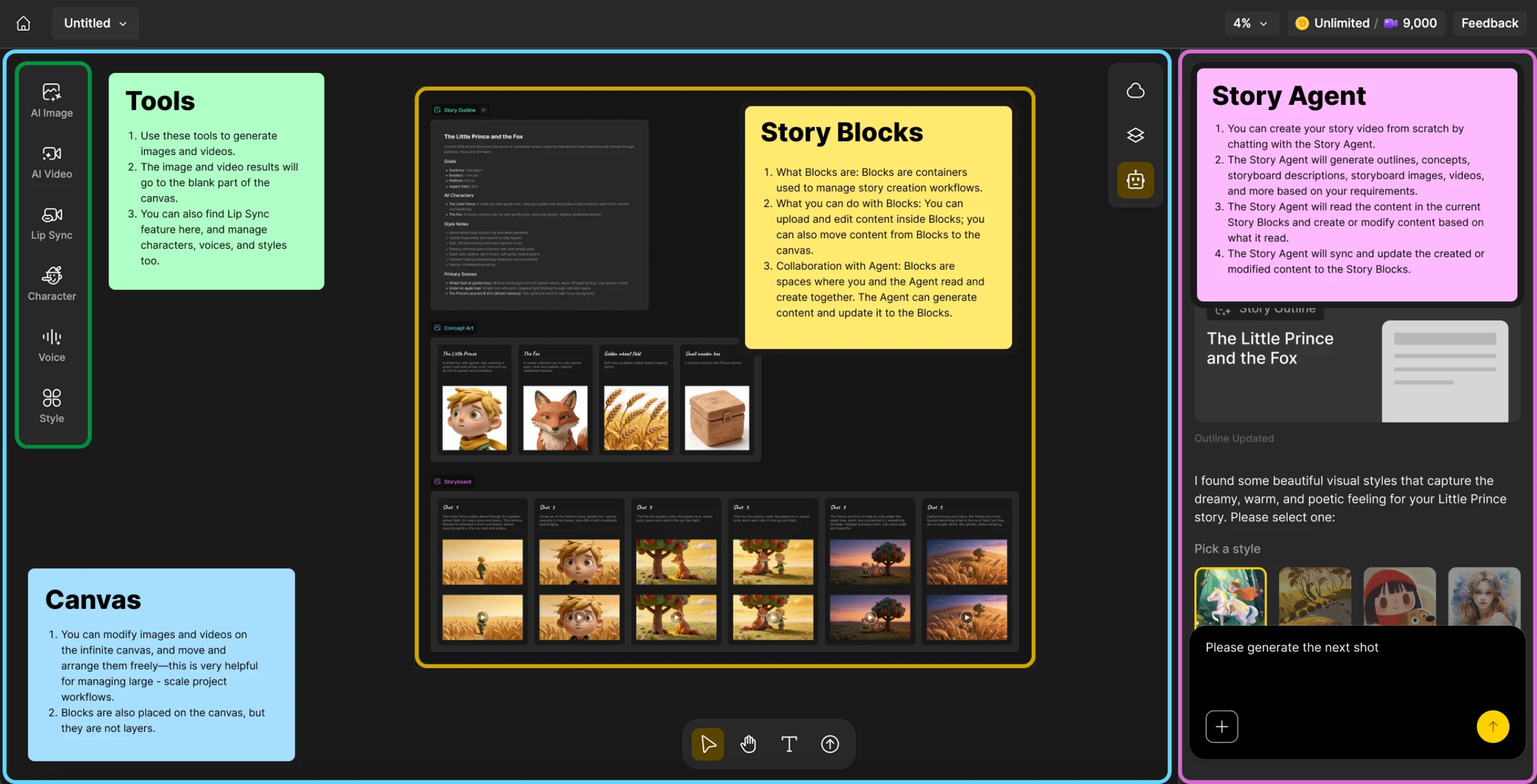
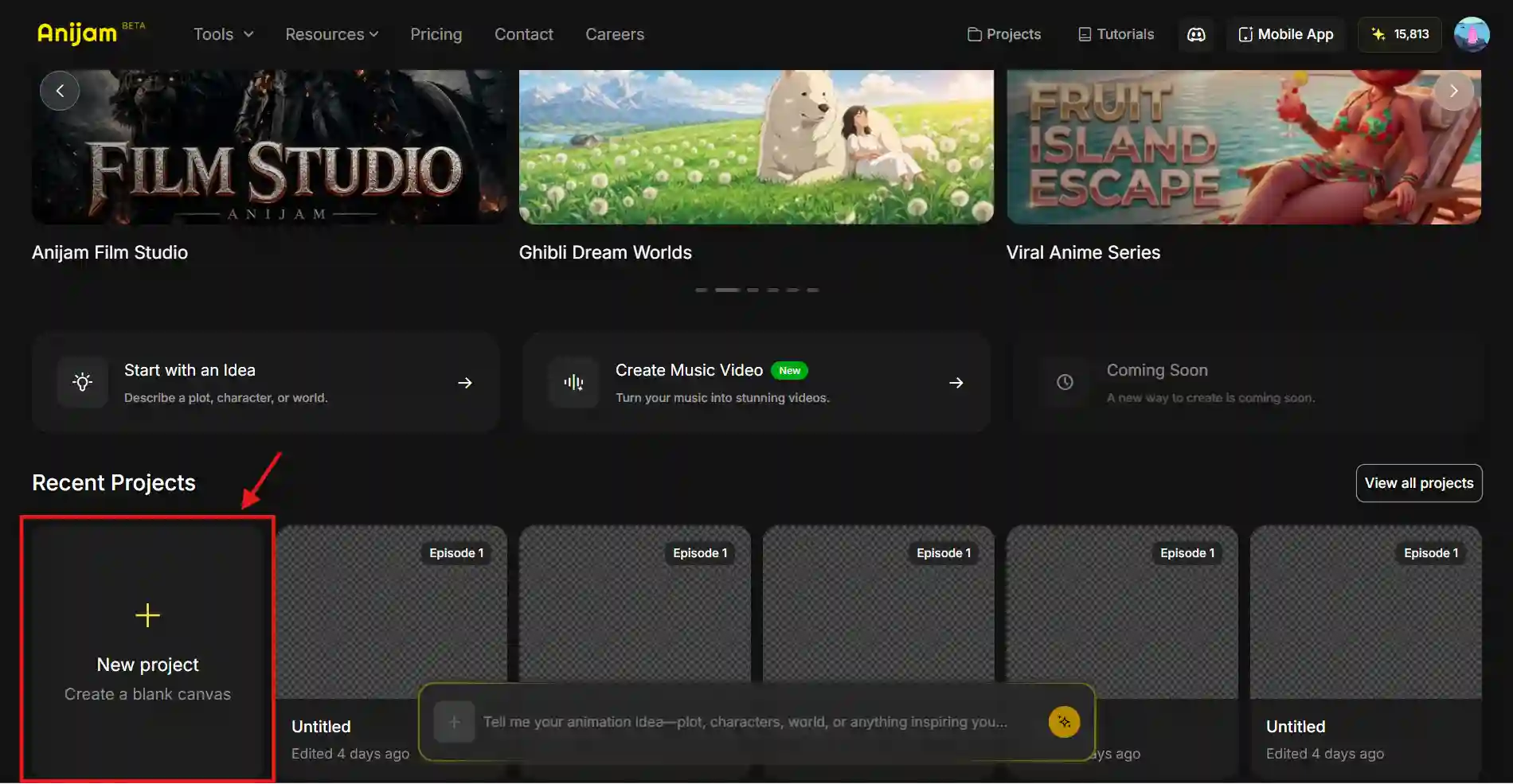
Step 1 - Start a new project: From the Anijam homepage, click New Project to open a blank canvas. This automatically creates Episode 1 for you - there’s no separate setup step, you’re dropped straight into a workspace ready for your first episode.
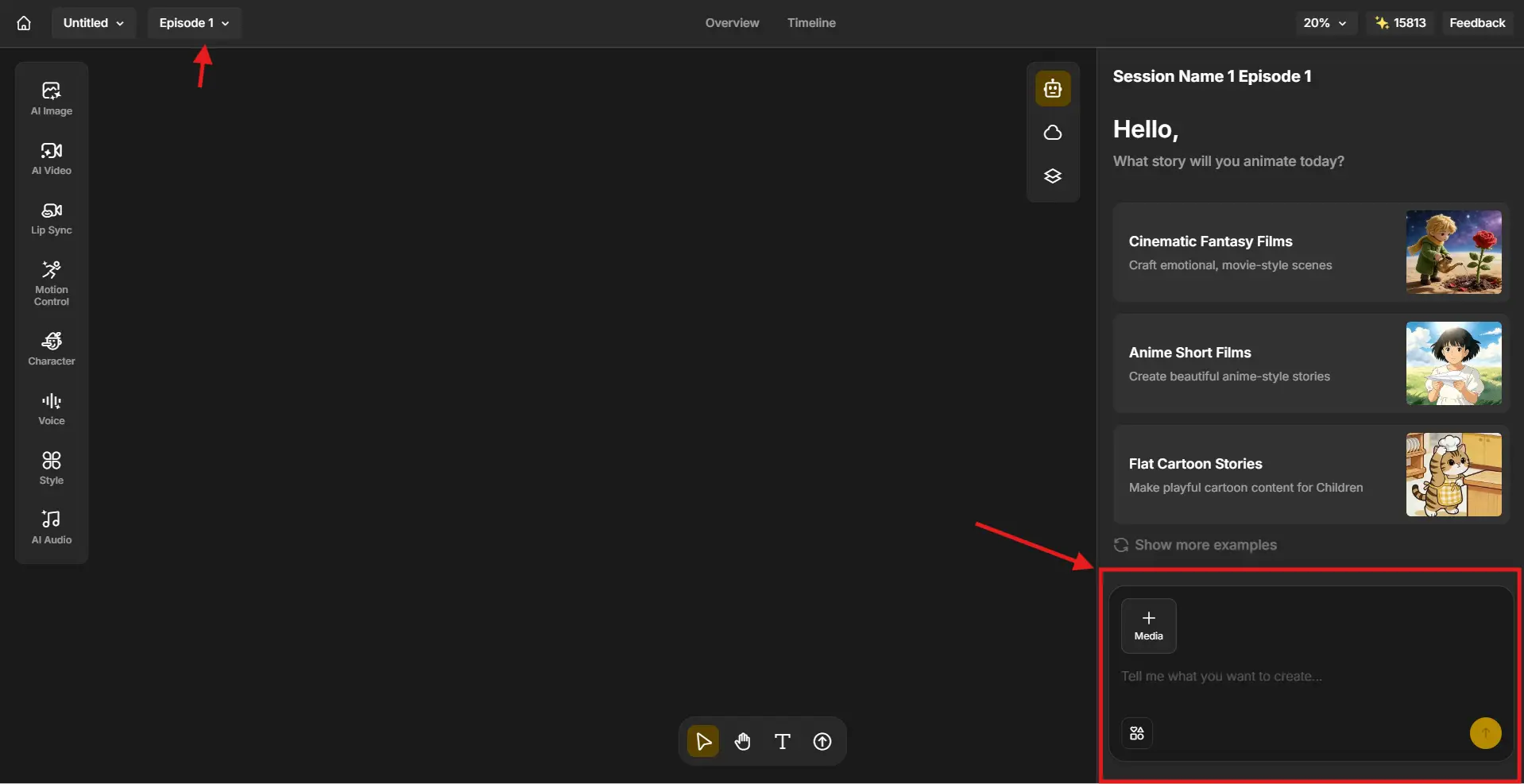
Step 2 - Chat with the AI to plan Episode 1: Inside the workspace, Anijam’s built-in AI assistant asks what story you want to animate today. Describe your plot, character, or world directly in the chat, or pick one of the suggested starting points - like Cinematic Fantasy Films, Anime Short Films, or Flat Cartoon Stories - to jump-start the idea and set the visual tone before you write a single line yourself.
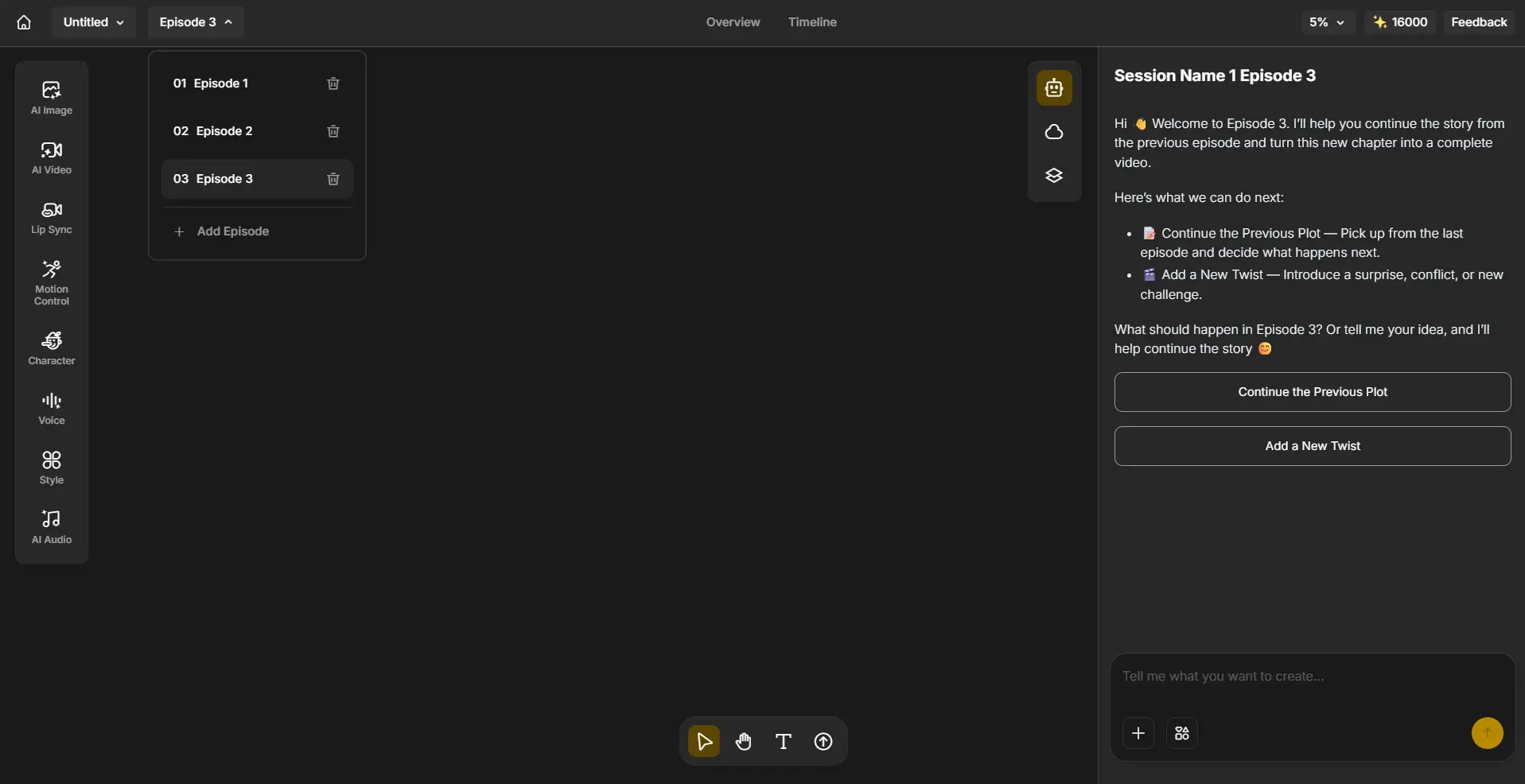
Step 3 - Add and manage more episodes: Once Episode 1 is generated, keep building the series from the same project instead of starting over. Use Add Episode to create Episode 2, Episode 3, and beyond, and switch between them anytime from the episode list. For each new episode, the AI assistant already knows what happened before and offers two starting points: Continue the Previous Plot, which picks up where the last episode left off, or Add a New Twist, which introduces a surprise, conflict, or new challenge.
Step 4 - Build your characters and style: Use the tool panel on the left - Character to design and lock in your cast, and Style to set the visual look of the episode. Characters you create here are saved as reusable assets, so the same design carries over automatically into every future episode instead of being redrawn from scratch each time.
Step 5 - Generate images, video, and motion: With your plot and characters set, use AI Image and AI Video to generate the actual scenes, and Motion Control to direct how characters and camera move within each shot.
Step 6 - Add voice and lip sync: Use the voice generator to generate or upload dialogue, then lip sync to match mouth movement to every line automatically. AI Audio covers music and sound effects for the rest of the scene.
Step 7 - Review, assemble, and export: Switch to the Overview tab to see your whole episode at a glance, or the Timeline tab to fine-tune pacing shot by shot. Once everything lines up, export the finished episode - ready for YouTube, TikTok, or Instagram.
Best Practices to Make Your Short Drama Go Viral
- Open on the conflict, not the setup: the first 2-3 seconds need to make a promise - a betrayal, a reveal, a confrontation - before anyone has a reason to keep watching.
- End every episode mid-beat: a cliffhanger only works if the conflict is unresolved when the episode cuts, not wrapped up with a bow.
- Keep one character bible, always: the same face, voice, and wardrobe across every episode is what makes a season binge-able instead of confusing.
- Pick one dominant genre and commit: blending tropes works, but a season that can’t be summarized in one sentence (“secretly wealthy CEO, contract marriage, revenge twist”) is harder for new viewers to jump into midway.
- Post consecutively, not sporadically: short drama audiences binge - a season released in a tight run performs better than the same episodes trickled out over months.
- Label AI-generated content honestly: transparent disclosure keeps you aligned with platform policy and builds trust with audiences who are increasingly comfortable with AI-made drama when it’s upfront.
- Localize once a season gets traction: short drama travels well across markets - re-voicing a proven season with AI dubbing is usually faster than writing and shooting a new one from scratch.
Conclusion
TikTok short drama turned a serialized, cliffhanger-driven format worth billions into a native part of the feed - and now the platform is building its own apps, trademarks, and original productions around it. The genres and structure are already proven; what used to stop most creators was production. Tools like Anijam AI close that gap, turning a script and a cast of consistent characters into a finished, cliffhanger-ready vertical episode, without a camera, a studio, or a single actor on set. And once your season is out, the same character-consistent workflow carries over if you want to repurpose episodes for YouTube Shorts or other vertical feeds.
Frequently Asked Questions
What is a TikTok short drama?
A TikTok short drama, or micro drama, is a scripted, serialized story told in vertical, one-to-three-minute episodes, usually spanning a season of 20 to over 100 episodes, with each installment ending on a cliffhanger designed to pull viewers into the next one.
Where can I watch short dramas on TikTok?
Look for the Short dramas button in TikTok’s main navigation, next to Shop, Explore, and LIVE - it opens a dedicated hub with Rankings and a Latest feed. TikTok also has a companion standalone app, PineDrama, linked to your TikTok account, for watching the same kind of series outside the main feed.
What are the most popular short drama genres?
CEO and billionaire romance leads globally by watch time, werewolf and fantasy romance is especially strong in the US, and revenge plots tend to have the highest completion rates because every episode delivers a small payoff toward the ending.
Do I need actors or a film crew to make a short drama?
No. AI character design tools can generate consistent characters, scenes, voices, and lip-synced dialogue from a written script, which is why AI-made short drama has become common on TikTok without traditional casting or filming.
How long should a short drama episode be?
Most short drama episodes run one to three minutes, cut to end mid-conflict rather than after a resolution, since the cliffhanger - not the runtime - is what drives viewers into the next episode.
What’s the best AI tool for making a short drama series?
It depends on your workflow. For creators who need consistent characters across dozens of episodes, along with scene generation, lip sync, and voice in one place, Anijam AI is designed to support this kind of episodic, series-based production.
by Wendy
Wendy is a passionate writer and AI video enthusiast at Anijam, exploring creative ways to bring stories to life with AI-powered image and video tools. She shares practical tips, prompt ideas, and insights to help creators turn their imagination into engaging visual content.