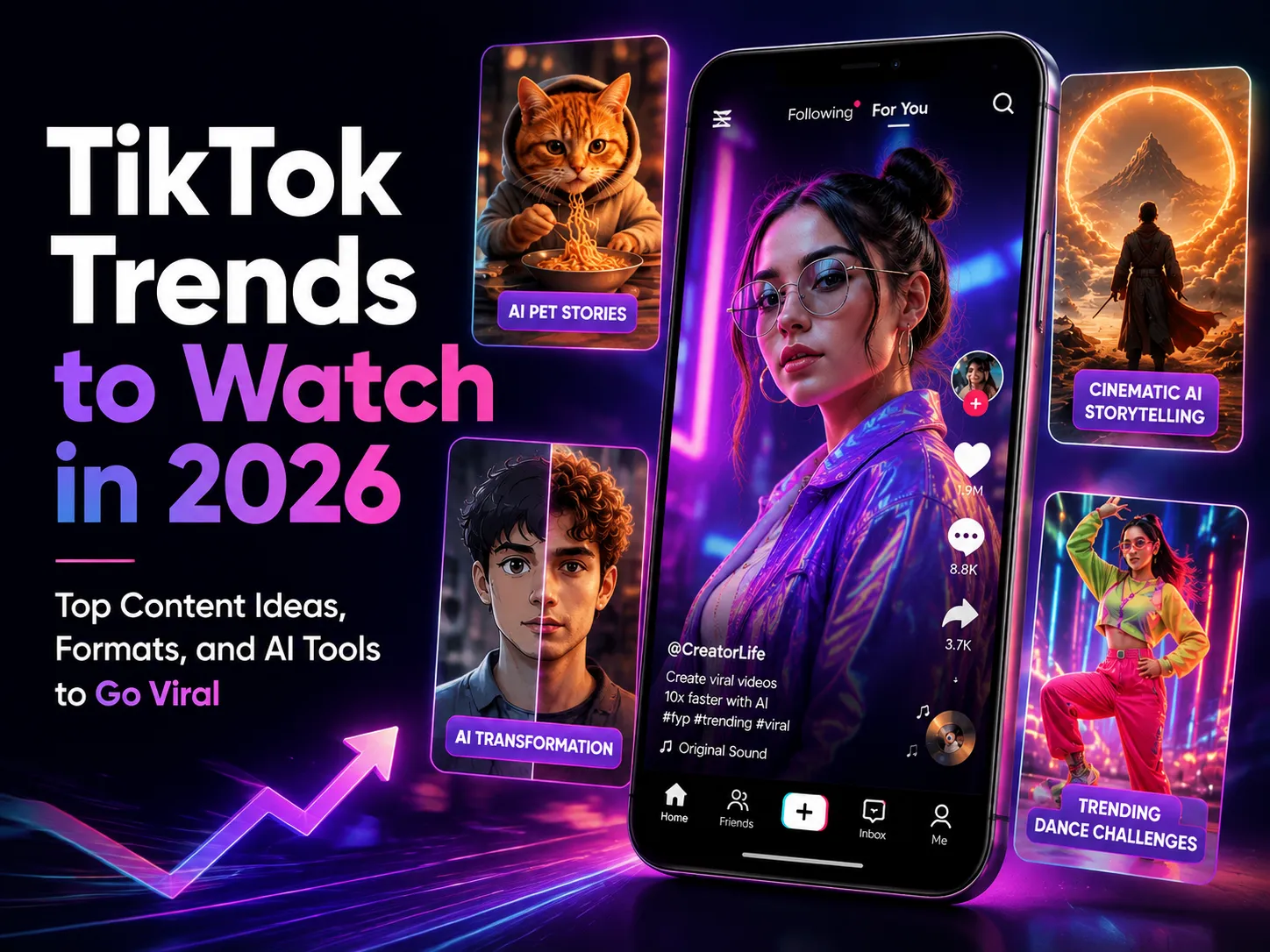
TikTok Trends September 2026: What’s Actually Going Viral Right Now
Updated monthly - last refreshed September 2026.
You open TikTok to check one notification, and twenty minutes later you’ve seen a repetition joke, a “which one of us is cooler” split-screen, and a sound you now can’t get out of your head - but you still don’t have a video of your own posted this week. That gap between watching trends and actually making one is the real bottleneck, not a shortage of ideas.
In this article, we’ll introduce what’s trending on TikTok right now, the formats that keep resurfacing no matter the month, and a step-by-step way to turn any of them into a finished video with AI - no filming, editing software, or on-camera talent required.
Why TikTok Trends Matter in 2026
TikTok isn’t just the biggest short-form app anymore - it’s becoming the default search engine for a growing share of users. A few numbers explain why chasing trends here specifically is worth the effort:
- Scale keeps compounding. TikTok now sits at roughly 1.9-2 billion monthly active users, with people spending close to 95 minutes a day in the app on average.
- It’s replacing search for a lot of people. A 2026 Adobe report found 49% of consumers now use TikTok as a search engine, and Gen Z in particular treats it as a faster way to find recommendations and answers than typing into Google.
- A new account has the same shot as a huge one. Distribution on TikTok is decided fresh for every single video, not carried over from your history - each post gets sampled against a small group first, and how that group behaves determines whether it goes further or quietly stalls out.
- Trend windows are short. Most individual trends have a real lift window of roughly three to seven days before they saturate, which is exactly why “I’ll get to it next week” usually means missing it.
In short: this isn’t just a list of fun formats to try. It’s a live snapshot of what TikTok’s algorithm is actively rewarding, updated as it shifts.
What’s Trending on TikTok Right Now - September 2026
A few specific formats are dominating the For You Page this week:
The “My American Girl Doll” trend. The audio isn’t a creator flexing on purpose - it’s a genuinely unfiltered 2009 childhood clip. Creator Angelo David resurfaced an old home video of himself as a kid, screaming “my American girl doll Mia, woahhh, I just got her two weeks ago” straight into his dad’s webcam. Creators are now recycling that exact clip to reveal their grown-up version of a prized possession - a package that just landed, a diploma, a new relationship - and letting the mismatch between childhood-level hype and something completely ordinary do the joke for them.
The “Right Round Hangover” trend. Creators wait until someone - a dad, a kid, a grandparent - falls asleep on the couch, then quietly build a full Hangover-movie aftermath around them: beer bottles, candy wrappers, sunglasses, a backwards cap perched on their face, sometimes a portable grill staged nearby. Then they snap it flash-on, paparazzi-style, set to Flo Rida’s “Right Round.” The whole joke runs on contrast - the sleeper looks completely undisturbed while everyone around them looks like they survived Vegas.
The “How Could This Day Get Any Better” trend. No elaborate setup needed - just a single, unremarkable object filmed deadpan while the audio delivers the line “oh boy, a [object], how could this day get any better.” Then the bass drops and the camera tilts or pans to reveal an entire stash of the same thing instead of just one. The joke is that the “upgrade” still isn’t impressive - it’s just more of the same - and staying flat-faced through the reveal is what sells it.
What’s Trending on TikTok Right Now - August 2026
A few specific formats are dominating the For You Page this week:
The “Bob” trend. The joke here isn’t a punchline - it’s the refusal to deliver one. A creator poses a question, then answers it three or four times in a row with the exact same word, letting the reaction get bigger and more theatrical with every repeat instead of switching up the content. It works precisely because it breaks the usual “list format” expectation that each answer should be different.
The “How Different Our Lives Are” trend. Two contrasting routines, filmed in short bursts throughout the day and cut together for maximum contrast - one version calm and composed, the other chaotic. The trend started as a two-person format between friends or siblings, but a growing share of creators now shoot both “characters” solo, just by changing outfits or settings between takes.
The “Things That Are Worth the Money” trend. No trending sound drives this one - just a creator talking straight to camera, running down a handful of purchases or habits they’d defend as genuinely worth it. Mixing something oddly specific in with the obvious picks is what keeps a list like this from feeling like filler.
The “Saxophones Are Getting Louder” trend. An escalating, over-the-top instrumental cue gets dropped onto footage of something completely mundane, while on-screen text spells out the slow-motion disaster the creator sees coming. The gap between how serious the music sounds and how small the actual problem is does most of the comedic work.
Individual sounds and formats like these rotate out fast, but they’re all variations on a smaller set of durable structures that keep coming back. Here’s the fuller list.
Top TikTok Trends & Content Categories in 2026
Quick Reference: Trends at a Glance
| Category | Why It Works | Best Fit |
|---|---|---|
| Dance & trending audio challenges | High shareability, algorithm-friendly, low skill floor | Entertainment, music, lifestyle |
| Educational how-to content | Drives saves and rewatches; compounds through TikTok search | Education, tutorials, niche experts |
| UGC-style talking-head lists | Feels like a recommendation from a friend, not an ad | Any niche, especially product-led brands |
| Behind-the-scenes / “Reali-Tea” | Matches TikTok’s own 2026 shift toward honesty over polish | Personal brands, small businesses, founders |
| Trend remix with a niche spin | Fastest way to reach beyond your existing followers | Any account, if adapted rather than copied |
| Faceless & AI avatar content | Lets accounts post daily without an on-camera host | Camera-shy creators, scaled channels |
| Episodic / series formats | Builds a returning audience instead of one-off views | Storytelling, recaps, ongoing bits |
Dance Challenges and Trending Audio
Dance content hasn’t gone anywhere - it’s still one of the most reliably algorithm-friendly formats on the platform, largely because it’s built for exactly what TikTok rewards: a recognizable sound, an easily repeatable movement, and content that invites duets and remixes. The choreography itself matters less than being an early, visible adopter of whatever audio is currently climbing; simple, amateur-friendly movements consistently outperform technically polished routines.
Quick Educational and Explainer Videos
Short how-to content is having a real moment because TikTok is increasingly functioning as a search engine, not just a feed. A tight, specific explainer competes directly with a Google search for the same question, and it tends to earn more bookmarks and repeat views than most other formats - people save it to come back to later instead of just watching once and moving on.
UGC-Style Talking-Head Lists
Direct-to-camera list and recommendation videos (“5 things worth the money,” “things I wish I knew”) work because they read as a tip from a friend rather than an ad, even when a product is one of the items on the list. The format needs almost no production - a person, a camera, and a clear opinion - which is exactly why it scales so well for brands and solo creators alike.
Behind-the-Scenes and Unfiltered Moments
Polish is losing ground to process. TikTok itself flagged this shift in its 2026 trend outlook, coining the term “Reali-Tea” for a broader pullback from curated, aspirational feeds toward content that just shows how things actually happen. An account that posts a messy first attempt, an honest “here’s who’s actually behind this,” or a genuinely unedited clip of a real day is now competing favorably against far more produced content covering the same topic.
Trend Remixing With a Niche Spin
Jumping on a trending format is still one of the fastest ways to reach people outside your existing followers, but the accounts that actually benefit are the ones that bend the trend toward their specific niche instead of recreating it word-for-word. Generic participation - dropping a logo into a trend with no adaptation - is the most common way this fails.
Faceless and AI Avatar Channels
Faceless content has moved from a side-hustle trick to a mainstream production model. Creators using a consistent AI avatar or a clear, distinct voiceover are seeing meaningfully higher retention than generic stock-footage-and-narration channels, and the AI video generation tooling behind this shift keeps getting faster and cheaper - which is a big part of why faceless accounts can now post daily without burning out.
Episodic and Series-Based Content
Instead of one-off viral swings, more creators and brands are building numbered, recurring content - the same character or format showing up episode after episode. It’s a slower build than chasing a single viral hit, but it converts casual viewers into an audience that comes back specifically for the next installment, which compounds in a way single trend-jacked posts don’t.
How to Create Viral TikTok Video with Anijam AI
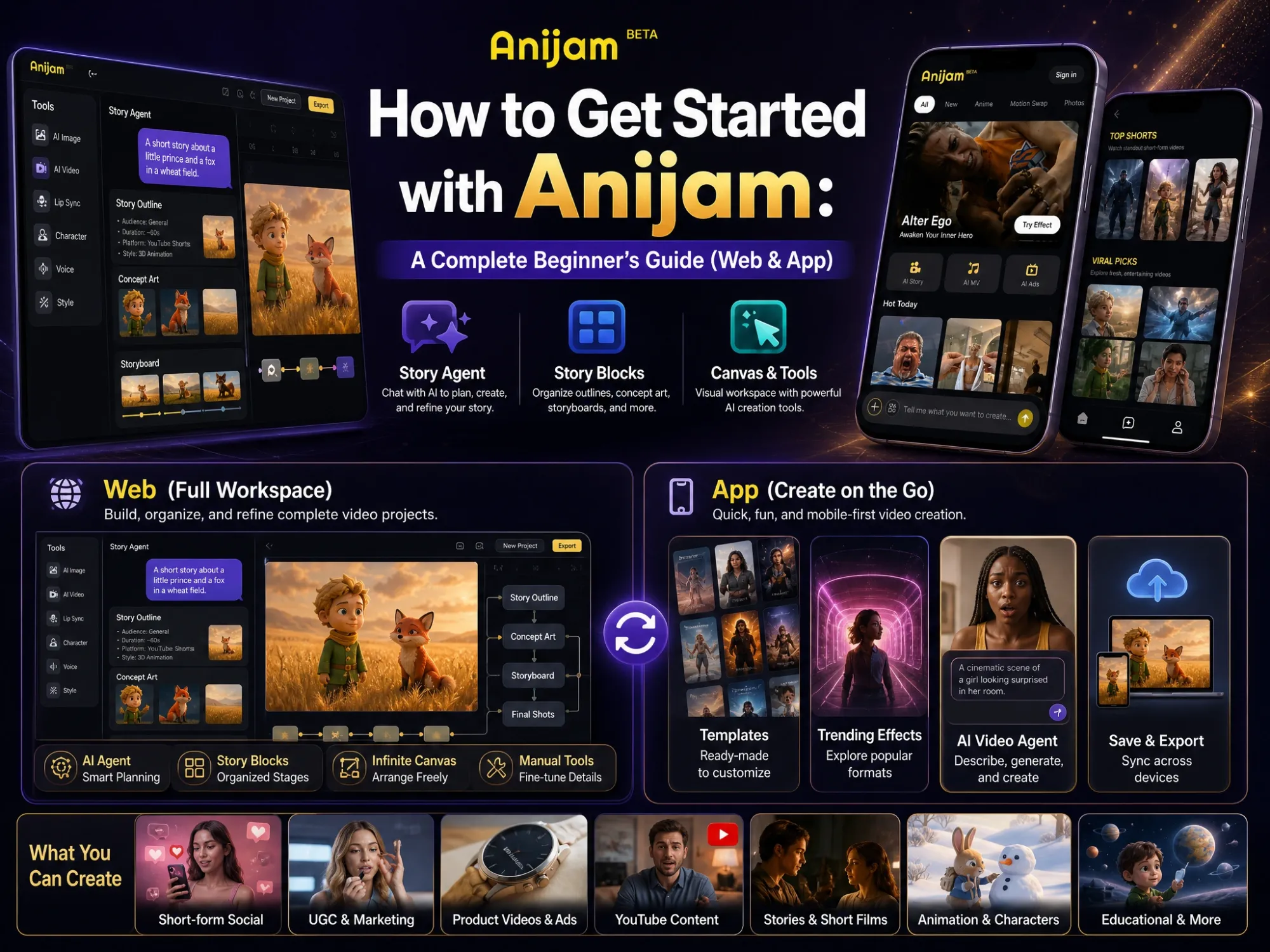
Most of the formats above share the same bottleneck: the idea takes five minutes to think of, but filming, voicing, and editing it used to take hours you don’t have. Anijam AI TikTok Video Generator is built to close exactly that gap - it turns a plain-language description, a reference photo, or a rough idea into a finished, TikTok-ready video, while helping creators build recurring series with consistent characters, scenes, and episodes. It handles character design, scene generation, voice, and editing in one place. Here’s how it works in practice.
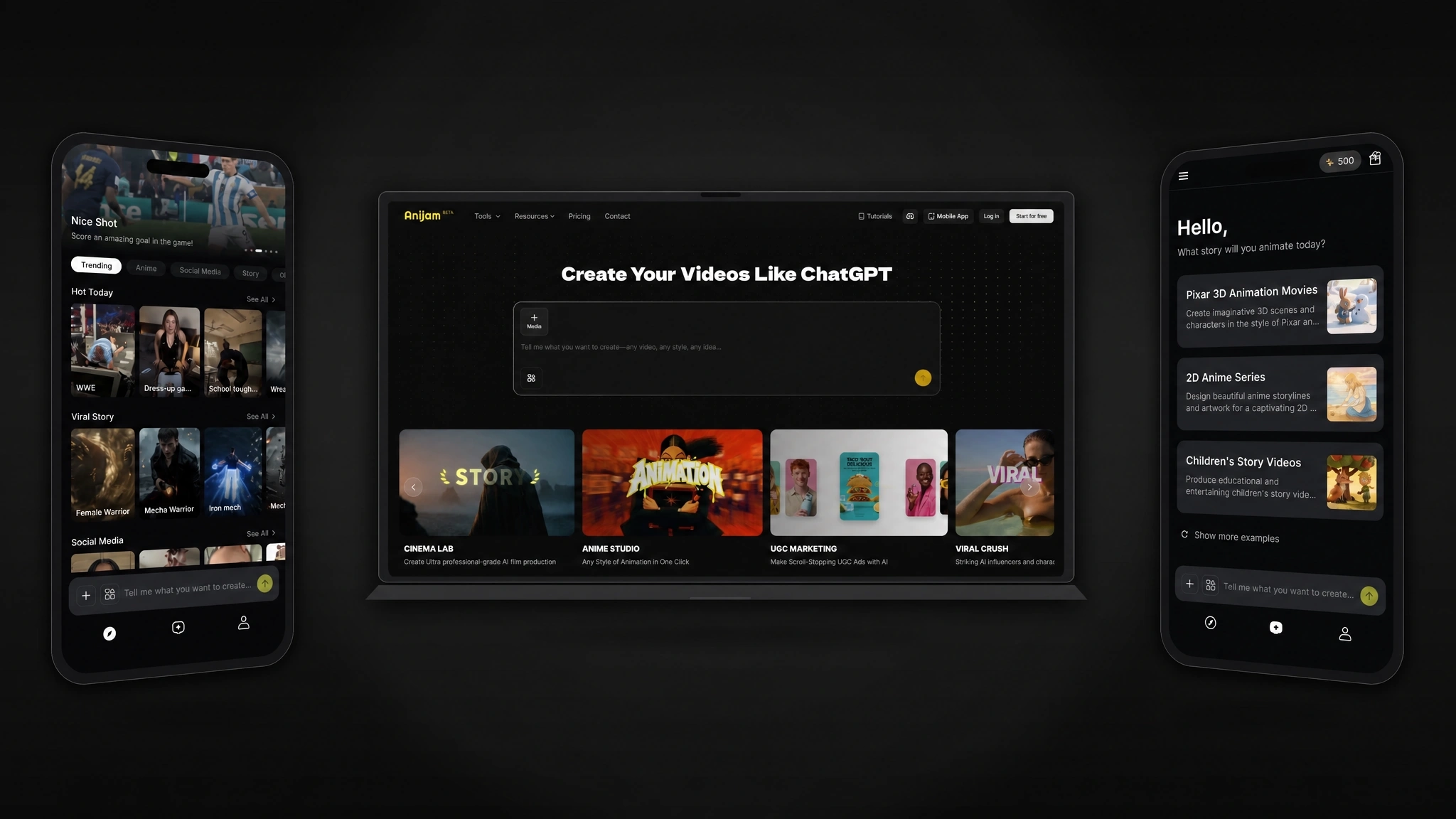
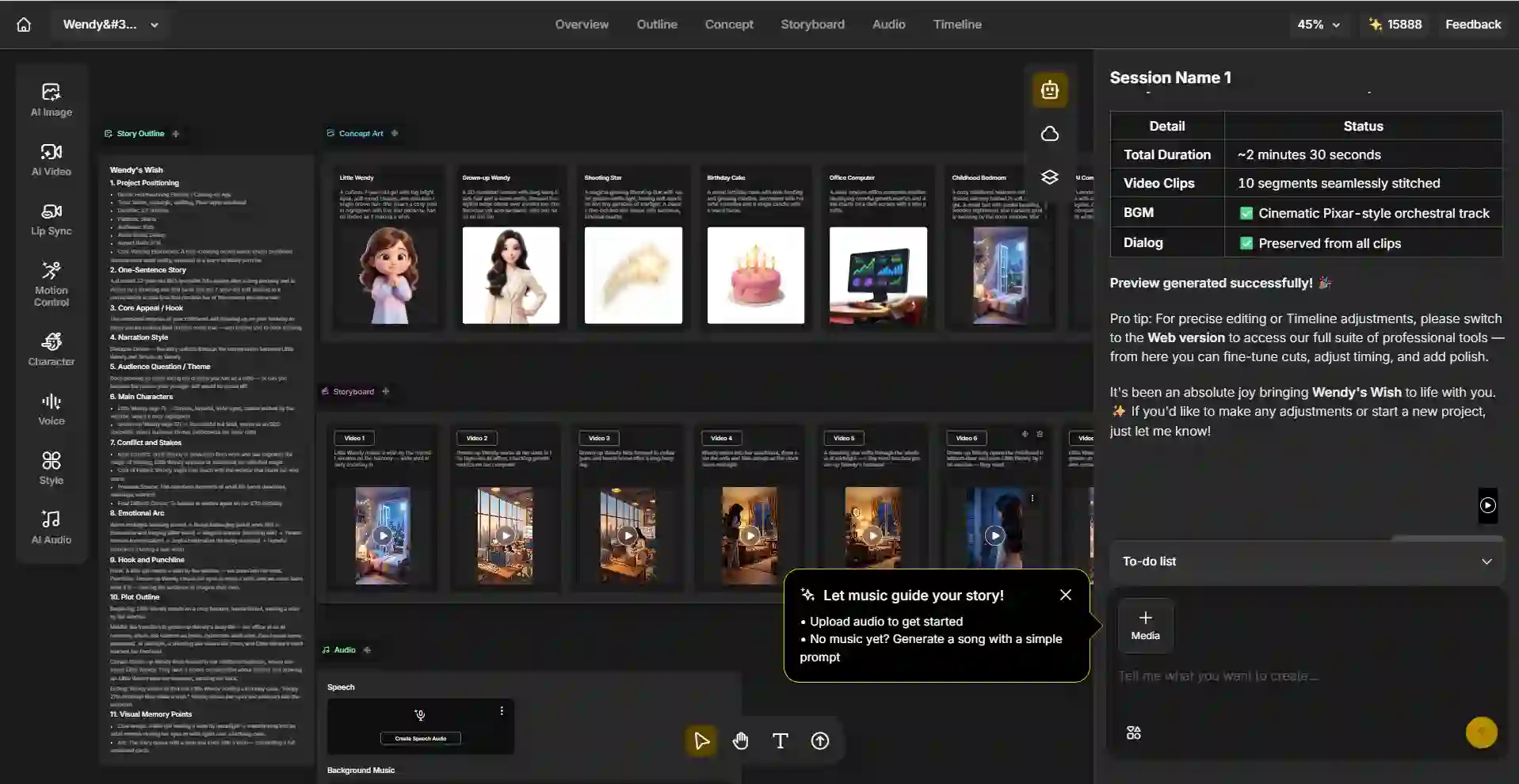
Step 1 - Describe your scene: Start from whatever trend you’re jumping on. For a format like “How Different Our Lives Are,” you might describe: “same character shown twice, side by side, one version calm and put-together, one version frazzled and rushing.”
Step 2 - Pick a style: Choose from Anijam’s style library - cartoon, Ghibli-inspired, cinematic, 3D, and more - or upload a reference image to match. For talking-head or list-style trends, a grounded, realistic style tends to fit best; for absurdist or repetition-based formats, a bolder cartoon style lands the joke harder.
Step 3 - Let the agent generate the scene: Anijam builds out the shot, keeping your character consistent across every cut - which matters for split-screen or before/after formats where the same character needs to appear more than once in a believable way.
Step 4 - Add voice and dialogue: For talking-head, list, or narrated formats, write or record your script and sync it with AI lip sync so the mouth movement matches automatically - no re-recording if you change a line.
Step 5 - Polish and export: Fine-tune pacing and transitions in the timeline editor so the hook lands in the first two to three seconds, add captions for sound-off viewers, then export in 9:16 for TikTok. Because it’s built around your own character rather than someone else’s footage, the finished video is fully yours to post and monetize.
Or Skip Straight to a Template
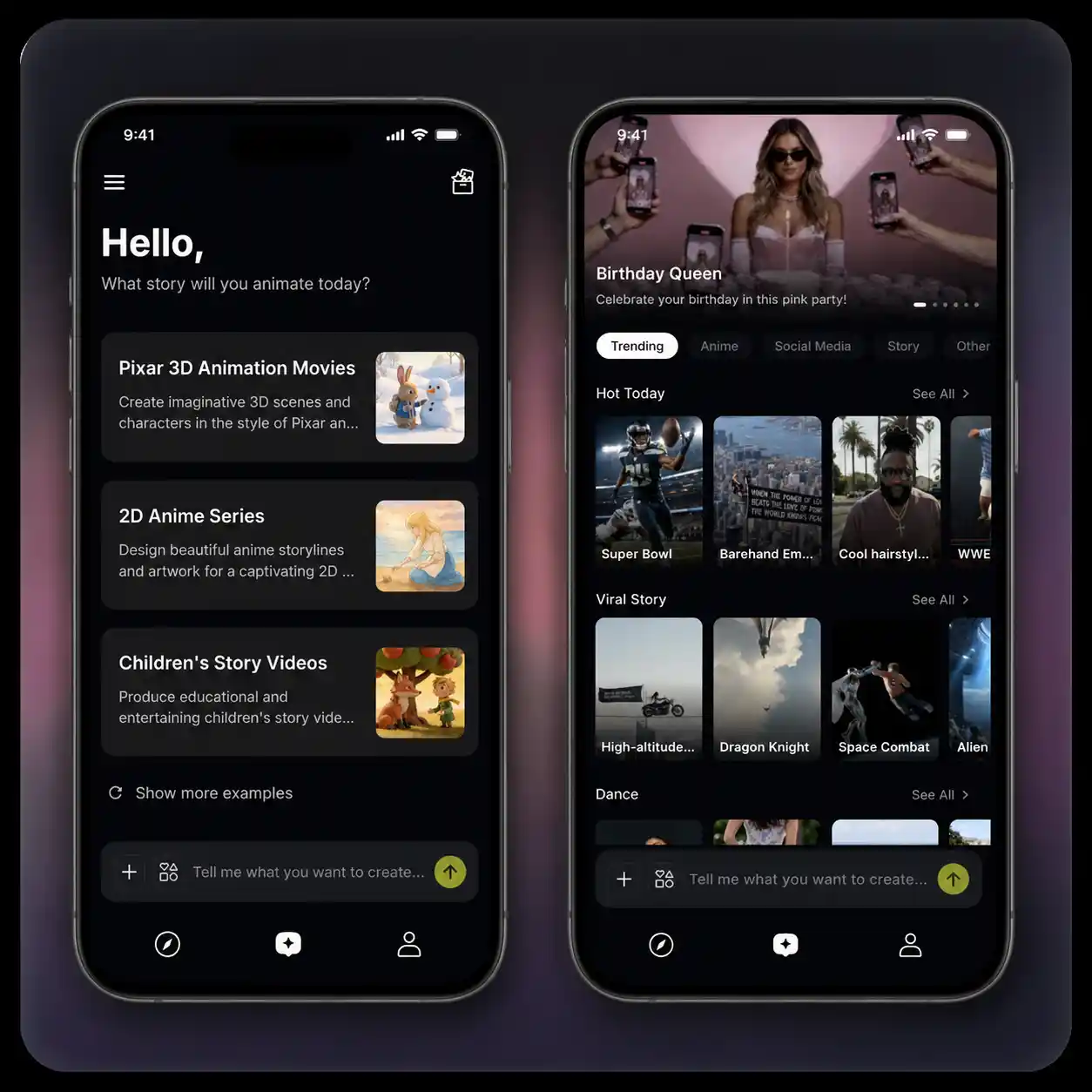
If you’d rather not start from a blank prompt, the Anijam app also keeps a running library of trending and funny video templates, built from scanning what’s actually taking off on TikTok, Reels, and Shorts at any given moment. Instead of reverse-engineering a trend’s structure yourself, open the app, pick a template that’s already built around it, drop in your own character or footage, and let the agent handle the rest of the scene.
Best Practices to Make Your AI TikTok Go Viral
- Hook in the first 2-3 seconds: TikTok’s test-batch system stalls videos that lose viewers immediately, so open on the most interesting moment, not a slow build.
- Adapt the trend, don’t copy it: the best-performing versions of any format are bent toward a specific niche rather than recreated word-for-word.
- Add captions: a large share of viewers watch with sound off, so on-screen text needs to carry the story on its own.
- Post while the trend is still climbing: most trends have a real lift window of just three to seven days - a rough version posted today usually beats a polished one posted next week.
- Label AI content honestly: transparent disclosure keeps you aligned with platform policy and builds trust with audiences who are increasingly comfortable with AI content when it’s upfront.
- Build toward a series, not just a single post: a recurring character or format compounds into a returning audience in a way one-off trend-jacking doesn’t.
Conclusion
Trends move fast on TikTok, but the two hardest parts - knowing what’s actually working right now, and turning that into a finished video - don’t have to both be hard at the same time.
The formats above cover what’s performing in 2026, and tools like Anijam AI cover the production side, turning a plain-language description into a platform-ready vertical video without filming, editing software, or an on-camera cast.
Frequently Asked Questions
What’s trending on TikTok right now? As of September 2026, the biggest formats include the audio-revival “My American Girl Doll” trend, the “Right Round Hangover” prank format, and deadpan reveal-gag trends like “How Could This Day Get Any Better.”
How long should a TikTok video be in 2026? TikTok supports videos up to 60 minutes, but most viral trend content stays short - typically 15-60 seconds - since the algorithm weighs completion rate heavily, and shorter videos are simply easier to watch all the way through.
Can I make a TikTok video without appearing on camera? Yes. Faceless content is now a mainstream approach on TikTok, using AI voiceovers, a consistent AI avatar, or animation instead of an on-camera host - and it can perform just as well as live-action content when the voice or character is distinct and consistent.
Do I need editing or animation skills to make a TikTok video with AI? No. Tools like Anijam are built so you describe your idea in plain language and the AI handles character design, scene generation, and motion - no filming, drawing, or animation software experience required.
How do I find trending TikTok sounds before they peak? Check the audio’s current post count rather than just recognizing the sound - a track with a few hundred posts has far more runway than one already sitting at hundreds of thousands. Cross-referencing what’s rising on TikTok’s own trend pages weekly is more reliable than relying on a static list.
What’s the best AI tool for making TikTok videos in 2026? It depends on your workflow, but for creators who want scene generation, character consistency, lip sync, and editing in one place - rather than piecing together several separate AI tools - Anijam AI is built specifically for that end-to-end TikTok production process.
by Wendy
Wendy is a passionate writer and AI video enthusiast at Anijam, exploring creative ways to bring stories to life with AI-powered image and video tools. She shares practical tips, prompt ideas, and insights to help creators turn their imagination into engaging visual content.